• Skip to main content
  • Skip to primary sidebar
  • About
  • Brief Dispatches

Multifarious Threads

Finn Gardiner

A Weighty Issue: Enough with the O-Word.

2nd June 2023 by Finn Gardiner Leave a Comment

(content warning: weight stigma, ableism, insulting medical terms in linked content)
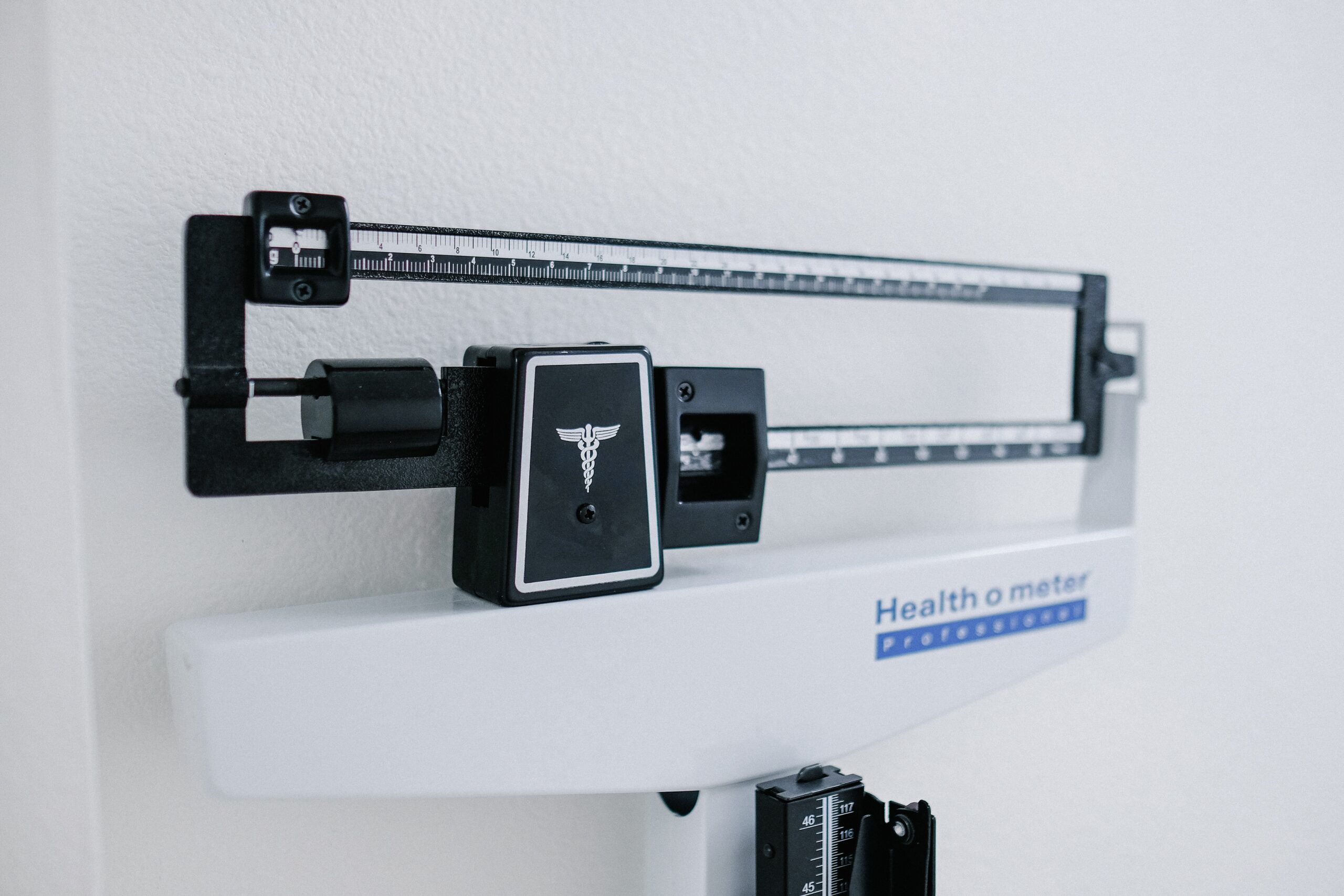
A photo of a doctor’s scales.

Reading anything to do with weight and health is similar to reading twentieth-century articles about intellectual and developmental disabilities. Idiot. High-grade moron. Intellectually subnormal. Low-grade imbecile. Mental defectives. Feeble-minded. R*tarded, r*tardates. As a disability activist who focuses on intellectual and developmental disabilities, I find the parallels disturbing.

Why? One word keeps coming up, and it starts with an O and rhymes with fleece.

What’s the matter with the O-word?

It engenders disgust, loathing and judgement that even overweight does not. It comes from a Latin term meaning “having eaten to the point of fatness”—a behavioural judgement, not a neutral clinical term. Before it was a diagnostic term, it was an ordinary insult. It’s as neutral as gluttony. Even corpulence would be an improvement, since it focuses on someone’s size, rather than how they got there. (It’s still insulting, so I’m not advocating its use.)

In the medical literature, the O-word is used as blithely as feebleminded, mental defective and high-grade moron were. People use it ad nauseam without a thought—or if they do think about it, they double down, saying “doctors use it,” as though that absolves them of their responsibility to acknowledge others’ dignity. After all, they once referred to female hysteria and drapetomania.

I am focusing solely on abandoning the O-word in clinical practice, as well as health and wellness websites that refer to the clinical literature. Metabolic science is still in the idiot and mental defective era. We categorise people by their size in ways that are uncomfortably parallel to high-grade moron, use disparaging diagnostic terms, and use “the science” to justify what would be called bullying outside a doctor’s office. Research has shown that higher-weight people object to the O-word—especially Black people—even though clinicians continue to use it repeatedly in their articles. Although clinicians publishing scholarly articles may be following standard practice in their field, it still makes for painful reading.

Weight researchers have started moving toward person-first language, but this is only a Band-aid, just as person with mental r*tardation was back in the 1990s.

I don’t know the right approach to improving people’s metabolic health. But I do know that a field that continues to use pejoratives as diagnoses for the people it claims to support, even if they are shifting toward person-first language, has probably not advanced enough to find the right answers. That was the case with developmental disabilities in the twentieth century, and it’s the case now with weight and metabolism.

Even for those who think that high weight is caused solely by unhealthy behaviour, this is no excuse. Medical history is littered with moral judgement disguised as concern for people’s health, moral defective chief among them. Also, there’s precedent in medicine for developing more sensitive terms in behavioural health: people with substance-use disorder, rather than drunks or junkies. Most practitioners would blanch at applying a term like drunk or junkie in a clinical setting—so why persist in using its modern-day equivalent in metabolic science or endocrinology? Instead of supporting people, we are diagnosing them as food junkies.

What other names should we use?

Radicals in the body-positive and fat-acceptance movements prefer fat, but most higher-weight people continue to avoid it. Fat is analogous to crip: widespread in radical activist circles, but rejected by people outside the movement. For that reason, I don’t advocate the use of fat in clinical settings. Instead, I recommend using an expression like higher-weight.

Even if you consider a high Body Mass Index a medical condition, then you are saying that someone has a disability or chronic illness. By that measure, the continued use of the O-word is a kind of ableism, just as the R-word, moron and mental defective were before it. If you want to use a clinical term to describe high weight and medical conditions that are often correlated with it, why not use metabolic syndrome? At the very least, it focuses on bodily processes (like diabetes or lower-back pain) and doesn’t have the whiff of a playground taunt.

How can we move forward?

The problems with the O-word go beyond the label itself. Social justice isn’t reducible to words—after all, there are people who use all the right nomenclature and still manage to be jerks. For example, I’ve seen a lot of pro-Russian or anti-Ukraine commentators using Kyiv, preferred by many Ukrainians, rather than the Russian-derived Kiev (CW: war coverage).

The O-word is harmful because it is an insult repurposed to be a medical term. It is more like junkies or gluttons than diabetics or people with cerebral palsy. It is used to justify “care” that fails to acknowledge people’s human dignity. It is used to blame and shame. Even as people come to understand the complexities of metabolic health, they continue to use a term that places all the blame on the individual rather than the psychological, social, material, cultural and interpersonal factors that affect their health. It is particularly jarring to see the O-word used in articles that decry weight stigma: it is similar to a substance-use specialist saying that “we should fight stigma against junkies,” or a clinical psychologist saying that “we must acknowledge the dignity of mental defectives.” If you want to avoid stigmatising people with substance-use disorders, you don’t call them junkies. If you want to acknowledge the dignity of people with intellectual and developmental disabilities, you don’t call them mental defectives. And if you want to end weight stigma, you shouldn’t use the O-word.

Weight stigma is detrimental to people’s mental health—and that stress can lead to adverse health outcomes. Ironically, stress can lead to the very thing that many clinicians want to avoid: weight gain. Because they’ve come to acknowledge the harmful effects of weight stigma, practitioners are starting to recommend health-promoting habits, like exercise and eating nutritious foods, rather than focusing on weight loss.

Clinicians are starting to make steps toward more compassionate ways to understand weight and metabolic health, and it’s time to take another step. Medicine abandoned mental defective, r*tarded, and feebleminded and relegated them to the terms of abuse that they always were. It’s time to do the same with the O-word.
Filed Under: To Be Filed

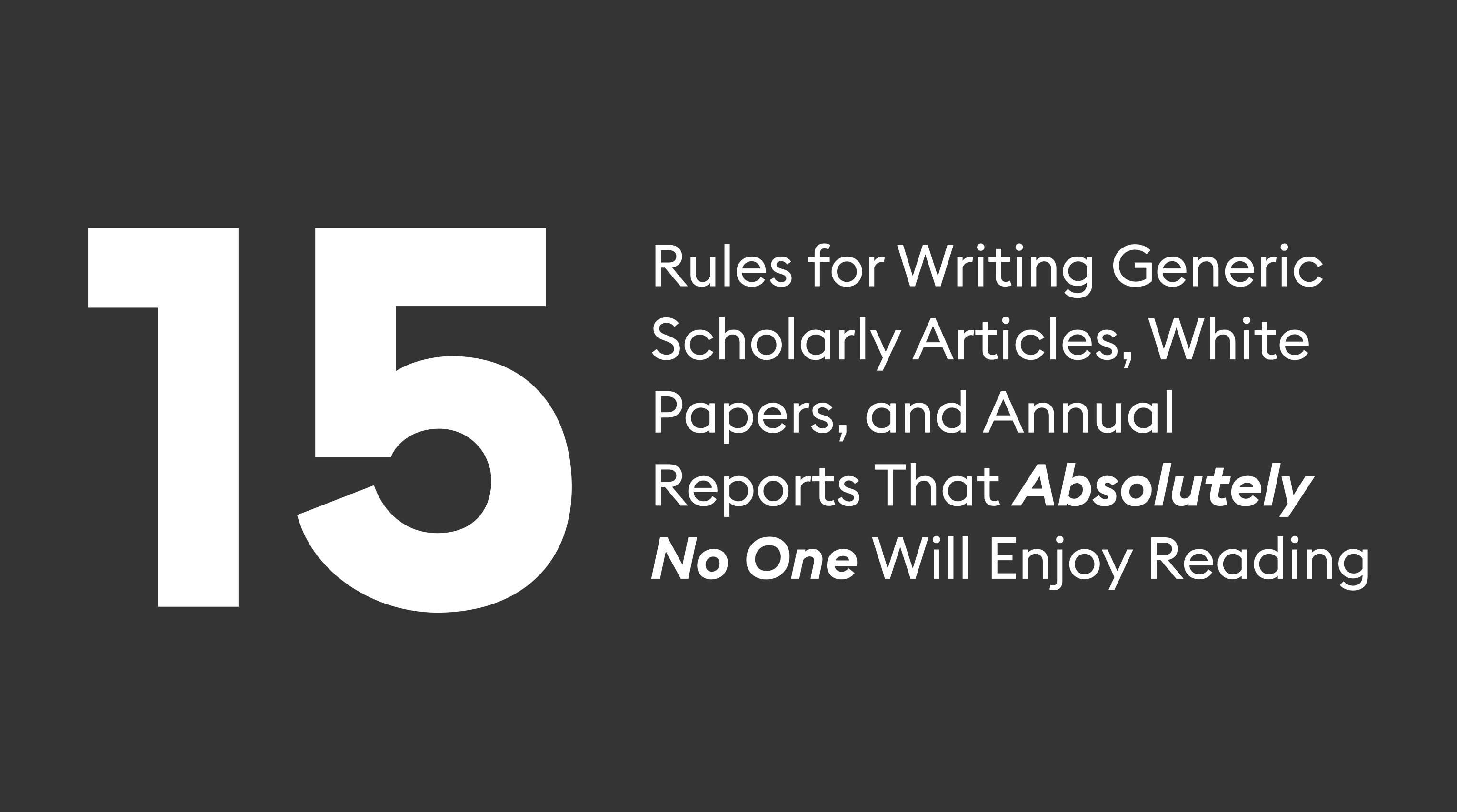
15 Rules for Writing Generic Scholarly Articles, White Papers, and Annual Reports That Absolutely No One Will Enjoy Reading

1st December 2022 by Finn Gardiner Leave a Comment

A graphic that says, "15 rules for writing generic scholarly articles, white papers, and annual reports that absolutely no one will enjoy reading."
  1. The passive voice must always be used.
  2. Avoid simple words like “before” and “after.” Instead, opt for “prior to,” “in advance of,” and “subsequent to,” which will doubtless make you sound more intelligent.
  3. To leverage your core competencies, liaise with key stakeholders, and build capacity in oral and written expression, it is to be ensured that every management-speak cliché is utilized going forward by all personnel—or they may risk being rightsized for not using best practices in their writing methodology. Remember, you’ll never be impactful without lots of jargon and gobbledygook, so stay within the parameters.
  4. Never write “people.” Write “persons” and “individuals” instead—preferably ten times on the same page.
  5. Even though you finished grad school ten years ago, write as though you’ve got a professor who wants a specific word count. Pad your sentences and paragraphs with as many redundant, repetitious, pleonastic, redundant, and tautological phrases and locutions as possible. Make them circuitous and repetitive, too. “Overall,” “in the final analysis,” and “it is interesting to note” are also handy ways to lengthen a paper that’s otherwise short on content.
  6. Who needs “because” when you can use “due to the fact that,” “in light of the fact that,” and “owing to the fact that”?
  7. Add in some legalese for extra variety. You’ll always sound more authoritative if you say “pursuant to” instead of “under” or “according to.”
  8. Forget what Strunk and White said about omitting needless words. In fact, you should include a plethora of superfluous vocables in excess; otherwise, you won’t come across as scholarly enough. (See also Rule 5.)
  9. Spock and Data from Star Trek should be your models of good writing. Contractions make you sound personable, which is not the done thing.
  10. A paper is never complete without a few parenthetical references (PRs), especially for words that won’t be used anywhere else in the paper.
  11. Never start your sentences with “and” or “but.” Use heavy openers like “in addition” and “however” instead.
  12. When quoting sources, don’t use “said.” Words like “noted,” “indicated,” and “stated” sound more elegant, don’t you think?
  13. To sound more credible, say “evidence-based” and “best practices,” even when the evidence in question is a few online commenters, and the “best” practices aren’t even in the top ten.
  14. If you’re a psychology researcher, be sure to say that your respondents “endorsed” having depression and anxiety—because nine out of ten patients apparently endorse feeling like shit.
  15. Never get help with your writing. After all, your middle-school English teacher told you that you were the best writer in the class, so how much more help do you need?

Filed Under: To Be Filed

How Not to Write

1st December 2022 by Finn Gardiner Leave a Comment

Prior to the inception of this paper, input was sought by all relevant stakeholders with regard to the maximisation of reader frustration, boredom and agony. Most intriguingly, there was a statistically significant correlation between reduced reader attention span and utilisation of field-specific jargon. Additionally, chi-square tests of significance indicated that boredom and jargon utilisation were not independent of each other. In the qualitative portion of our study, several participants endorsed boredom and depression from reading yet another terrible psychology paper. Bloggs, Smith & Jones (2022) noted the connection between poor writing in the social sciences and the desire of this blog’s author to pull his hair out every time he reads any of these badly written articles. Due to the fact that this paper was written deliberately to induce boredom in its readers, we were able to get published immediately without even a ‘Revise and Resubmit’.

Prior to the establishment of our nongovernmental organization, the Principals were coinvestigators on a comprehensive, holistic project to implement strategic plans for corporate social responsibility at WidgetCorp. Subsequent to the founding of Bullshit, Inc., the Principals developed a long-term holistic strategy to enshrine best practices for liaising with community stakeholders to create impactful change.

Impactful best-of-breed methodologies to leverage our core competencies and build capacity to develop, maintain and steward best practices for all key stakeholders going forward.

We develop client-centric solutions for large- and medium-sized concerns, all of which are based on the industry’s best practices. Diversify your supply chain, synergize your office, and expand capacity in your organization with Bullshit, Inc.’s patented methodologies. At the end of the day, it’s the strategy that counts!

Utilising our proven methodology, our impactful programme builds capacity among BIPOC and LGBTQIA youth to foster meaningful linkages with community organisations and other key stakeholders in our overall efforts to dismantle systemic oppression and incorporate equity into our communities. Now we are looking for a dynamic director with leadership potential who can liaise with stakeholder organisations, uphold our values and engage with the overall community.

The overall study presents a new and exciting interpretation of the systemic oppression of BIPOC in the face of carceral feminism in a problematic neoliberal societal context.

We need to come up with an actionable action plan. It needs to be bleeding-edge, robust, scalable and best-of-breed to develop the next generation of proactive leaders.

Filed Under: To Be Filed

Family relationships and moral reasoning

5th November 2022 by Finn Gardiner Leave a Comment

I wrote this in April 2006; for context, I was still living with my parents, with whom my relationship was growing increasingly strained for a number of reasons. While I still agree with the premise that parents should make good-faith efforts to understand their children’s moral reasoning, or to find others to help them understand said reasoning, I would use different language nowadays to construct the argument.

I believe that many things that people consider sacred, such as the (blood-) family, government, laws, religion and patriotism are merely social constructs. They are capable of informing some of our ideas, but they do not define who we are. These constructs have specific sets of ethos, but what happens when an individual born within those paradigms starts to pull away from them? Are they no longer part of that constructed entity because they differ, or are they renegade members of the construct who need to be pulled back in, or are they free agents capable of breaking free of these constructs and forming their OWN alliances with other individuals who are their spiritual kin (in a loose sense) rather than fellow members of a blood-family, or fellow-citizens, or fellow-practitioners of an ancestral religion? The problem with these constructs is that they deny the individual’s free agency in favour of a constructed reality that could be harmful to the individuals within it. There is, yes, a need for a social contract for those able to comprehend it, and punishments and rewards to reinforce those who do not comprehend abstract notions. However, for those individuals intelligent enough and varying enough to break free of those constructs, it must not be so noxious within the construct.

Family is a brilliant example of a miniature constructed society. In Western families, only the parents have voluntarily entered the constructed society. The children they have have not entered by choice, whether they were born serendipitously or if their birth was planned. In most traditionally-run households, the parents are solely responsible for discipline and writing up the social contract that is to be practised in the house. They expect their children to behave in a certain way, and any divagation from their precept (whatever it is) will be met with some sort of consequence, whether it is punishment in a strict sense or a less direct social repercussion. Children in families are far from being free agents. They are completely protected, and are often not participants in whatever the parents’ social contract is. This arrangement is flawed, especially after the youth in question get past the age of twelve, or thereabouts. Families should work on a higher level of moral reasoning if it is possible. A possible conflict of wills arises when the child is at a higher stage of moral reasoning and/or intelligence than his parents. The child will understand things they do not, and might reason on a social-contract or individual-value morality, rather than a community-based or punishment-reward based morality. A parent of a child like this will say ‘If you do not do X as I want it, then X will happen and you will not like it.’ The child will wonder whether the costs outweigh the benefits, or if a parent’s words truly are moral, or are important in the first place. Such an individual will have problems with pat b like ‘Don’t talk to anyone we have not met first’ or ‘Obey us at all times’ or ‘Never talk back’ or ‘Do your homework’ or ‘Wash your clothes’ or ‘Do not go to X place’ or ‘Go to church with us’ or ‘You must practise our religion because this is a Christian home.’ All these commands are difficult for the child to obey, because they are below his moral reasoning level and so do not appeal to him. Conversely, the child’s level of moral reasoning is difficult for the parent to comprehend because it is beyond theirs, and might frustrate them. Anyway, these commands are horrible for intellectually advanced individuals. I hate them, and always have.

Filed Under: To Be Filed

Education, Parenting, and Change for Tomorrow.

5th November 2022 by Finn Gardiner Leave a Comment

(originally written in late 2004, when I was 18. Very minor edits in 2018. Most of my beliefs haven’t changed much in this regard: I am vehemently against disproportionate discipline and oppose privatisation and charter schools as a means to reform education. I still support differentiated instruction and educational support for students of different abilities; no two learners are identical. I am no longer anti-psychiatry and support the use of psychiatric medication for people who benefit from it. For context, I wrote this essay in response to my frustrations with how I was routinely pathologised within the school system and the authoritarianism I encountered from my parents.)

Thoughts on the current system

As you all know, I am a supporter of public schooling, and I have a lot of strong views regarding education. Even though some of you may consider this view somewhat controversial, I find that it needs to be addressed, as there is quite a lot of disagreement as regards this topic. First, I support public schooling because it is of no direct cost to the parent. Indeed, public school funding does come from taxes. But still, it is not the same as paying for home-school curricula or private-school tuition. Home-schooling and private schooling are not necessarily options for poorer families. If someone lives in abject poverty, she is not going to be able to afford a home-school curriculum (some cost about $500 a year!) or be able to send her children to private school. Unschooling and home-schooling may work for those who have enough money and access to quality books, but what about those who cannot? There is already a large gap between the haves and the have-nots. Why make it larger by abolishing public education rather than merely repairing it? Also, there is the question of ideology and discrimination in private schooling. Private schools reserve the right to admit whomever they choose. They can refuse to admit a poor black child, or a young gay boy, or an atheist, and that students’ parents would not be able to sue. (If that is wrong, please tell me so.) Home school curricula also tend to have a conservative Protestant bias. Even the group of lawyers who defend home-schooling, the HSLDA, appear to be rather conservative in their views. They have lobbied against abortion, gay marriage, ad infinitum. (By the way the conservatism I refer to is social conservatism, not economic conservatism.) There needs to be some balance to all this home-schooling bias. Some homeschoolers’ books seem to inculcate bias and prejudice into them. Parents can use these to perpetuate ignorance into their children and inhibit curiosity and free inquiry, which is what a lot of the home-schooling advocates here try to promote. They learn not to ask intelligent questions, since all they get is pat answers. Example: “Mom, why do giraffes have long necks?” “Because God made it so.” I am not insulting God at all. But if you really want to teach your child science, not pseudoscientific creationism, then you can tell your child, “God made giraffes with long necks because …”. (The purpose of this mini-essay is not to teach pedagogical techniques, so I will stop right there and get back to my original topic.) Home-schooling can be good if done properly, but it can be abused.

Public schooling is a shambles right now. I know that from experience, and I know that from stories that others have told. Students are taught to obey school faculty unquestioningly, even when those people are wrong. They are punished for the most ridiculous things, such as having a pair of scissors, or wearing armbands or t-shirts in protest of a government action. The lessons learned in class are sanitised, and students grow bored easily. (I know I did.) Students are paddled by school administrators simply because they dared to speak out or act out against teachers’ abuses. Minority students (usually black or Hispanic) are singled out and mistreated. Students who would succeed under better circumstances are thrown into “special needs” classes or put on psychotropic drugs such as Ritalin, Wellbutrin, Prozac, and Zoloft because they disrupt the classroom’s social order (in which everyone must basically march in lockstep). I was drugged myself and put in those kinds of classes; I know about this. Believe me, it is hell. I am in no way supporting the actions of public schools now.

The prevailing attitude seems to be, “If you cannot make them sit down, shut up, and regurgitate our drivel, then either drug them up or beat the devil out of them.” This whole idea that is prevalent in public schools is antithetical to the true pursuit of knowledge. The problem is not the IDEA of state-sponsored education. The problem is its execution. If public schools were conducted differently, I would be a wholehearted supporter of them. First off, the purpose of public education must be made clear. It is not there to “socialise” students. It is there to educate. Second, the idea of a one-size-fits-all education must be abolished. I am not an ‘educational communist’ and do not believe that everyone should be kept on the same level. I do believe in a bit of healthy competition. It is preposterous to make a brilliant student do work that is far too easy for her, and ridiculous to make a severely [intellectually disabled] student try to pass a state test that is written for students [students without an ID]. Is everyone as intelligent as everyone else? Of course not. Since there are varying levels of intelligence, motivation, energy, and other personal characteristics, there must be varying methods of education for each student. Even if education is touted to be the “great equaliser”, unequal levels of intelligence and capability will manifest themselves and negate this notion.

The New Public Education and the new childrearing

In fact, I think that public education should be radically different from the way it is now. I envision a large facility in which there are several centres for experimentation and discovery, and teachers serve as guides and mentors rather than autocratic agents of the State. It would be filled with several resources to broaden students’ knowledge about their chosen subjects. Books, computers hooked up to fast Internet, laboratories, many field trips, you name it. It would be a bit like “autodidactism en masse” but it would be tax-funded. Poorer students could take part in this even if their parents could not afford to buy the books and other impedimenta for autodidactic learning because the State would provide it. Students would profit more from this sort of learning since the majority of them would only attempt to do things within their abilities. Of course, this sort of public education would not be compulsory; it would be voluntary. If a parent wished to teach his or her child differently, then it would be possible to do so. I know that there will still be those parents who will insist on teaching their children bullshit but after a few generations of the New Public Schooling and a change in parenting these problems will be decreased. If intellectual inquiry is encouraged, such things as the creationist movement will die out. I believe that real change must begin with our own individual families, as well with lobbying politicians. It is near impossible to change the views of the less-enlightened members of the older generation. But we, as young people, are able to start our own families and inculcate upon our children the importance of human rights. Existing attitudes towards pedagogy and childrearing are the foundations for the ageist beliefs that exist in the American consciousness. The idea of parental supremacy and infallibility is what later informs such unjust laws regarding youth. It is also related to the way in which current public schools are run, except that parental infallibility is converted to adult infallibility. In fact, most anti-youth ideas rise from the wrong-headed doctrine of parental superiority. Every single one of those laws places complete authority on the parent, rather than the youth herself. This attitude towards childrearing is an old one, and is difficult to expel from our collective consciousness because of the prevalence of fundamentalist religion and the constant influence of tradition. It is an attitude that partly comes from the Bible and other religious books (interpreted in a literalist and fundamentalist fashion), and partly from European and American tradition. Several verses in the Bible regard children as property and make it clear that disobedience to a parent’s will is a dreadful sin, not only against one’s parents, but also against the Almighty God. The authors of the Bible are also apparently ardent supporters of corporal punishment…even to the point of killing a disobedient child. Although there are verses in the Bible that could be used to support Youth Rights, the vast majority appear to favour the parent unfairly. If we, the Youth Rights activists, have children and we raise them in our revolutionary manner, ageism will gradually go away. The New Public Education will also aid in the changing of American opinion on childrearing and education because it emphasises intellectual inquiry and curiosity rather than blind obedience and submission.

Filed Under: To Be Filed

  • « Go to Previous Page
  • Page 1
  • Page 2
  • Page 3
  • Page 4
  • Page 5
  • Go to Next Page »

Primary Sidebar

October 2026
S M T W T F S
 123
45678910
11121314151617
18192021222324
25262728293031
« Sep    

A blurb.

A blog about disability, psychology, philosophy, language, culture and more. It’s a hodgepodge, and I hope you’ll find something that interests you. (If not, there are always adorable cat videos on YouTube, or influencers making fools of themselves on TikTok.)

Meta

  • Log in
  • Entries feed
  • Comments feed
  • WordPress.org

Copyright © 2026 · Lifestyle Pro on Genesis Framework · WordPress · Log in